What Is In-Home Care?
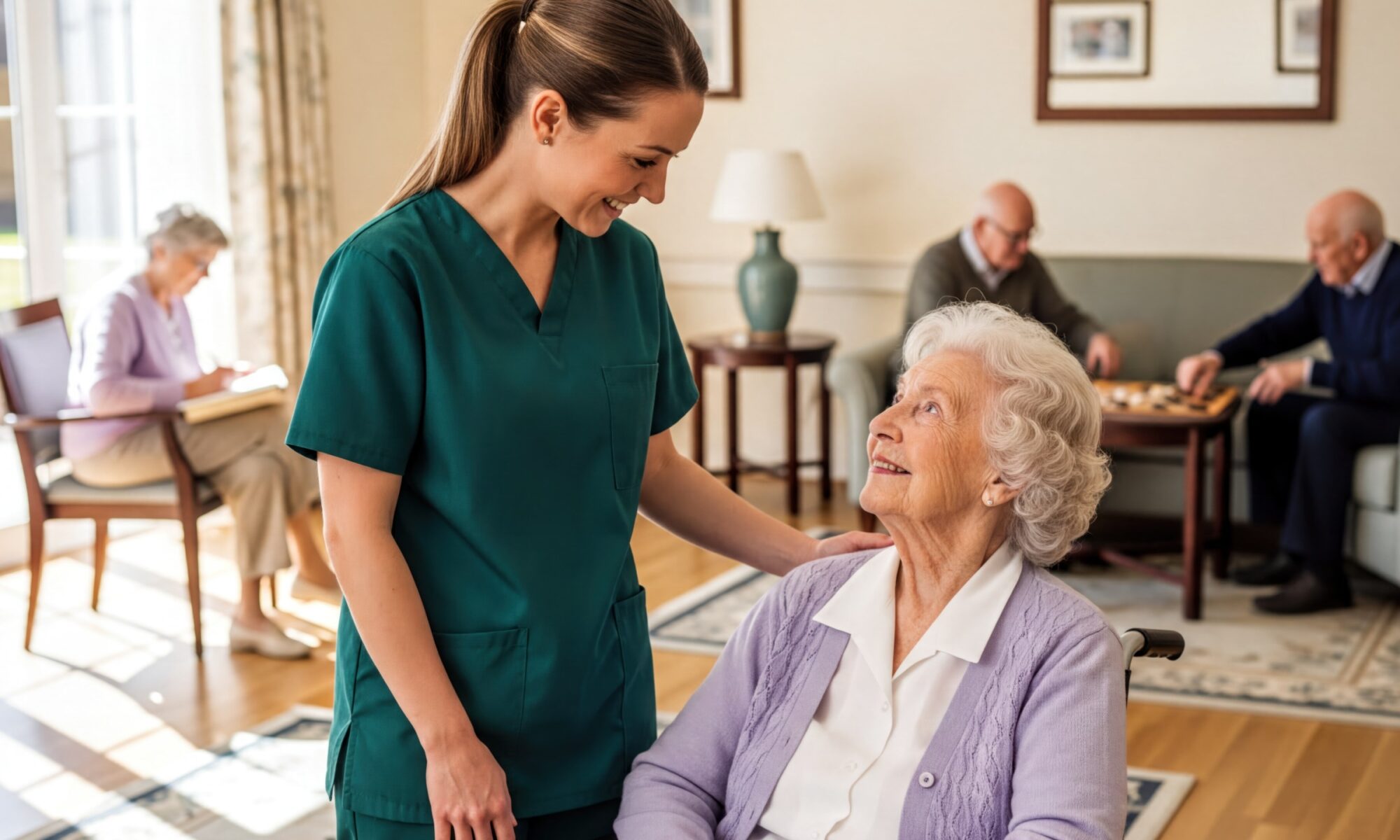
In-home care allows seniors to age in place — remaining in their own home, surrounded by the memories, routines, and comforts that bring them peace. For many older adults, home is far more than a building. It’s where they feel most like themselves. With in-home care, a dedicated caregiver comes directly to the senior’s residence to provide professional, nonmedical support. The level of care is fully customizable, from a few check-ins per week to around-the-clock supervision. Services typically include:- Companionship – Meaningful conversation, shared activities, and emotional support that goes far beyond what a rotating facility staff can offer
- Personal care – Gentle, unhurried assistance with bathing, dressing, grooming, and other activities of daily living
- Homemaking – Meal preparation tailored to dietary needs and preferences, light housekeeping, and laundry
- Transportation – Personalized rides to doctor’s appointments, errands, social outings, and places of worship
What Is Assisted Living?
Assisted living facilities are residential communities designed for older adults who require some help with daily tasks. Residents typically live in their own private or semiprivate apartments and have access to on-site support staff and communal amenities. Unlike a nursing home, which provides intensive medical care, assisted living focuses on a blend of housing, support services, and basic healthcare coordination. Key features include:- Communal dining – Three meals a day provided in a shared dining room on a set schedule
- Maintenance-free living – Housekeeping, laundry, and facility upkeep handled by the community
- On-site staff – Caregivers available around the clock, though their attention is shared among many residents
- Medication management – Staff who store and administer medications on a predetermined schedule
How Do Costs Compare?
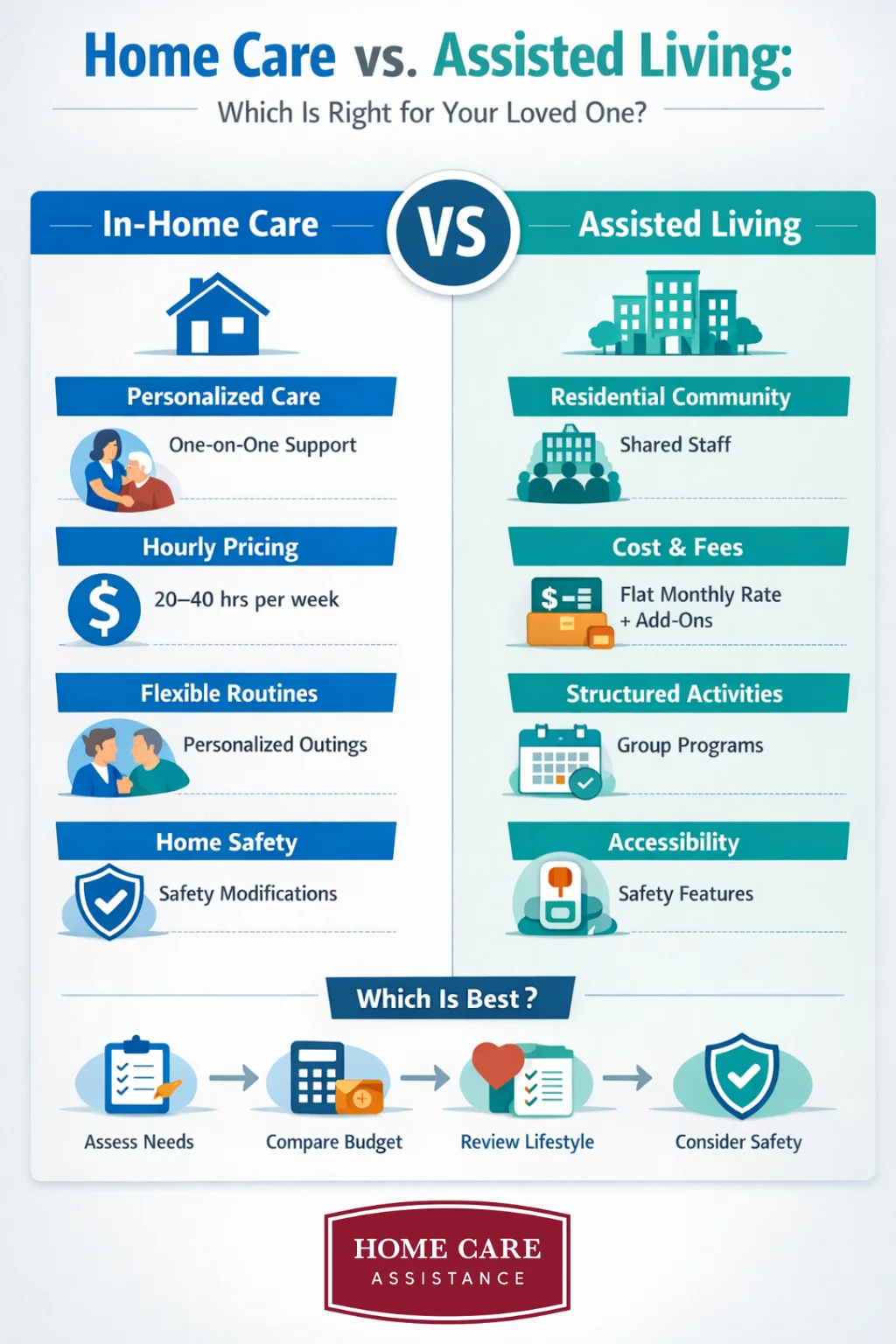
Cost is often a key factor for families, and the pricing models work quite differently. In-home care is typically charged by the hour, which makes it remarkably flexible. For seniors who need 20 to 40 hours of help per week — which is the majority of cases — in-home care is often more affordable than the flat monthly rate of an assisted living facility. You pay only for the care you actually need, with no additional charges for housing, meals you may not eat, or amenities you may not use. Assisted living involves a monthly base charge that covers the apartment, meals, and utilities, with additional fees for higher levels of care. While 24-hour staff availability is built into the cost, it’s worth noting that this staff is shared across all residents. The per-person attention is significantly less than what a dedicated in-home caregiver provides. For families seeking the best value in personalized care, in-home care often delivers more meaningful support per dollar spent — because every hour of care is devoted entirely to your loved one.How Do Social Life and Daily Routines Differ?
Social connection is vital to senior health, and both care options can support it — in different ways. Assisted living communities offer structured social calendars with group activities such as fitness classes, art workshops, movie nights, and outings. For some seniors, this built-in community is appealing. However, in-home care offers something that structured group activities cannot: genuine, personal companionship. A dedicated caregiver becomes a trusted companion who knows your loved one’s stories, preferences, and personality. In-home caregivers can also actively facilitate socialization by:- Driving seniors to community centers, religious services, and social clubs
- Accompanying them on walks, to parks, or to visit friends and family
- Coordinating visits with grandchildren, neighbors, and longtime friends
- Engaging in meaningful one-on-one activities tailored to the senior’s actual interests — not a generic group calendar
How Do Safety Considerations Differ?
Safety is paramount for every family. Assisted living facilities are purpose-built for accessibility, with wide hallways, emergency call systems, and fall-prevention features. This is a real advantage of the facility model. However, in-home care offers a different — and in many ways superior — approach to safety: prevention through personalized attention. With a dedicated caregiver, potential hazards are identified and addressed in real time. Your caregiver knows exactly how your loved one moves, where they’re most vulnerable, and what support they need at every moment. Home modifications such as grab bars, stairlifts, improved lighting, and non-slip flooring can make any home senior-friendly, often at a fraction of the cost of facility living. And because the caregiver’s full attention is on one person, response time in an emergency is immediate — there’s no waiting for a shared staff member to arrive from another room or floor. For seniors with conditions like dementia, the familiarity of home itself is a powerful safety feature. Research consistently shows that familiar environments reduce confusion, anxiety, and wandering behavior in dementia patients — making home one of the safest places they can be, with the right support in place.Frequently Asked Questions
Is in-home care cheaper than assisted living? +
In many cases, yes. For seniors needing fewer than 40 hours of care per week — which represents the majority of situations — in-home care is often significantly more affordable. You pay only for the hours you need, with no bundled housing or meal costs.
Is in-home care better for seniors with mild to moderate assistance needs?+
Absolutely. In-home care is ideal for seniors who need daily support but want to maintain their independence, privacy, and personal routines. The one-on-one nature of the care means every aspect is tailored to the individual.
Do assisted living facilities provide medical care like nursing homes?+
No. Assisted living offers medication management and daily living assistance but not the intensive skilled nursing care provided in nursing homes.
Which option is better for someone with dementia?+
For early to moderate-stage dementia, in-home care is often the stronger choice. The familiar home environment reduces confusion and anxiety, and a consistent, dedicated caregiver builds the trust and routine that dementia patients rely on. For advanced dementia requiring specialized memory care, families may explore additional options as needs evolve.
Can you start with in-home care and transition to assisted living later?+
Yes, and this is actually the approach many families take. Starting with in-home care allows your loved one to remain comfortable at home for as long as possible, with the option to reassess as care needs change over time.