
Medication organization is a crucial part of caring for a senior loved one, especially if he or she has a chronic condition or complex health needs. As a caregiver, your support can ensure medications are taken safely and effectively, preventing potential health complications. This guide outlines the key responsibilities you have in managing your loved one’s medications.
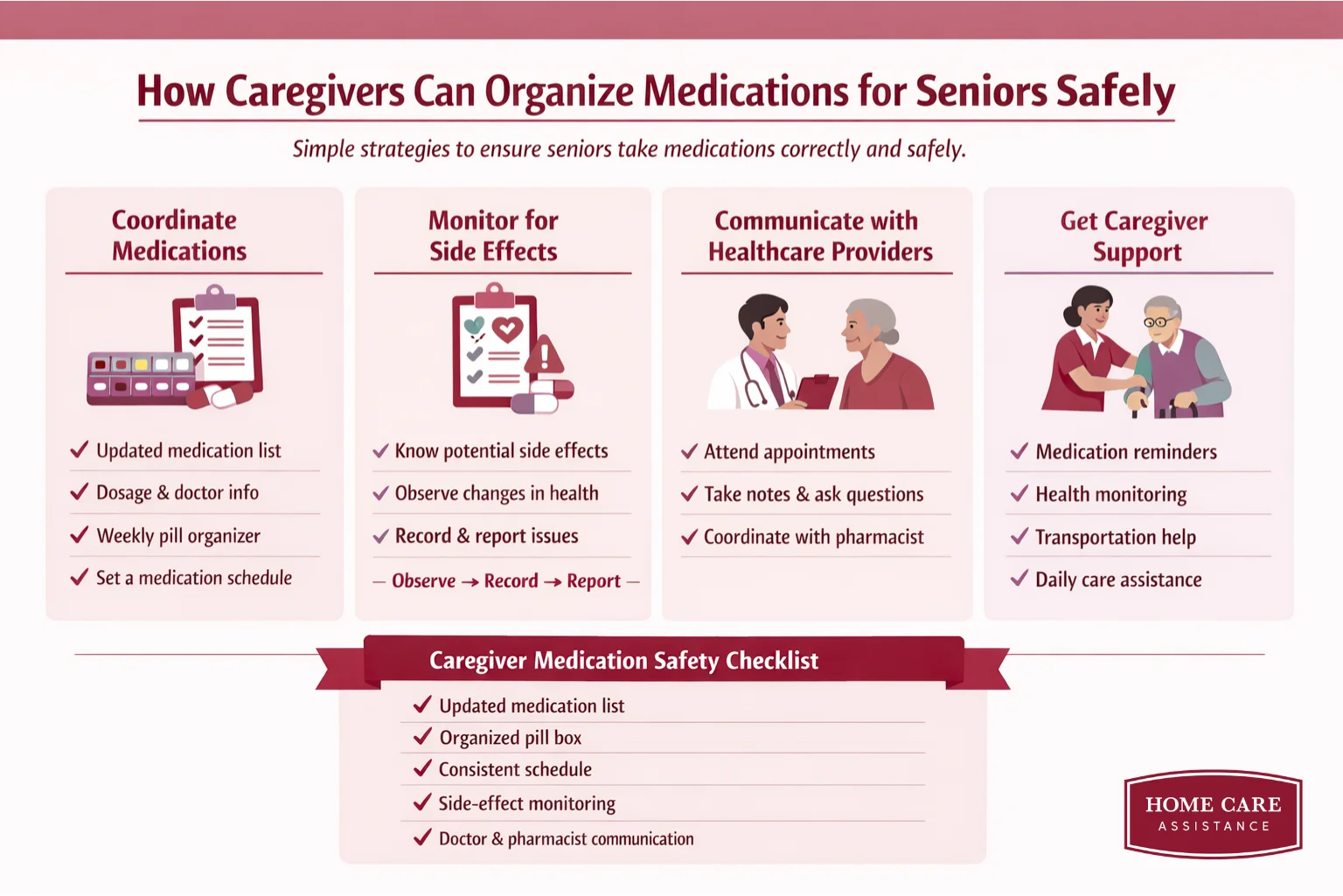
Coordinating Medications
One of the most important tasks for a caregiver is to create a clear and structured system for all medications. This can prevent missed doses or accidental double-dosing.- Create a medication list – Keep an updated list of all medications, including prescription drugs, over-the-counter medicines, and supplements. This list should detail the dosage, frequency, purpose of each medication, and the prescribing doctor’s name.
- Use pill organizers – A weekly or monthly pill organizer can simplify the process. Fill it at the beginning of each week to ensure the correct pills are ready for each day.
- Set a schedule – Establish a consistent daily routine for taking medications. Linking medication times to daily activities, such as meals or bedtime, can serve as a helpful reminder.
Monitoring for Side Effects
Caregivers are often the first to notice changes in their loved ones’ health. Monitoring for side effects from medication is a critical part of your role.- Know potential side effects – Familiarize yourself with the common side effects listed for each medication.
- Observe and document – Keep a log of any new symptoms or changes in behavior, mood, or physical condition. Note when the symptoms started and how severe they are.
- Report concerns – If you notice any concerning side effects or believe there might be an adverse reaction, contact your loved one’s doctor or pharmacist immediately. Don’t stop any medication without consulting a healthcare professional.
Communicating with Healthcare Providers
Acting as a liaison between your loved one and his or her medical team is another key responsibility. Effective communication ensures the care plan is accurate and effective.- Attend appointments – Accompany your loved one to doctor’s appointments to ask questions and take notes. This ensures you both understand any changes to the medication plan.
- Share your observations – Provide the doctor with your documented notes on side effects, medication adherence, and any other relevant observations.
- Coordinate with the pharmacy – Build a good relationship with the pharmacist. Pharmacists are a valuable resource for questions about drug interactions, side effects, and proper administration.