
Caring for a senior loved one approaching the end of life brings both profound responsibility and difficult choices. Understanding your options and preparing for these conversations can ensure your loved one’s wishes are honored while providing you with the guidance needed during this challenging time.
Understanding Advance Directives
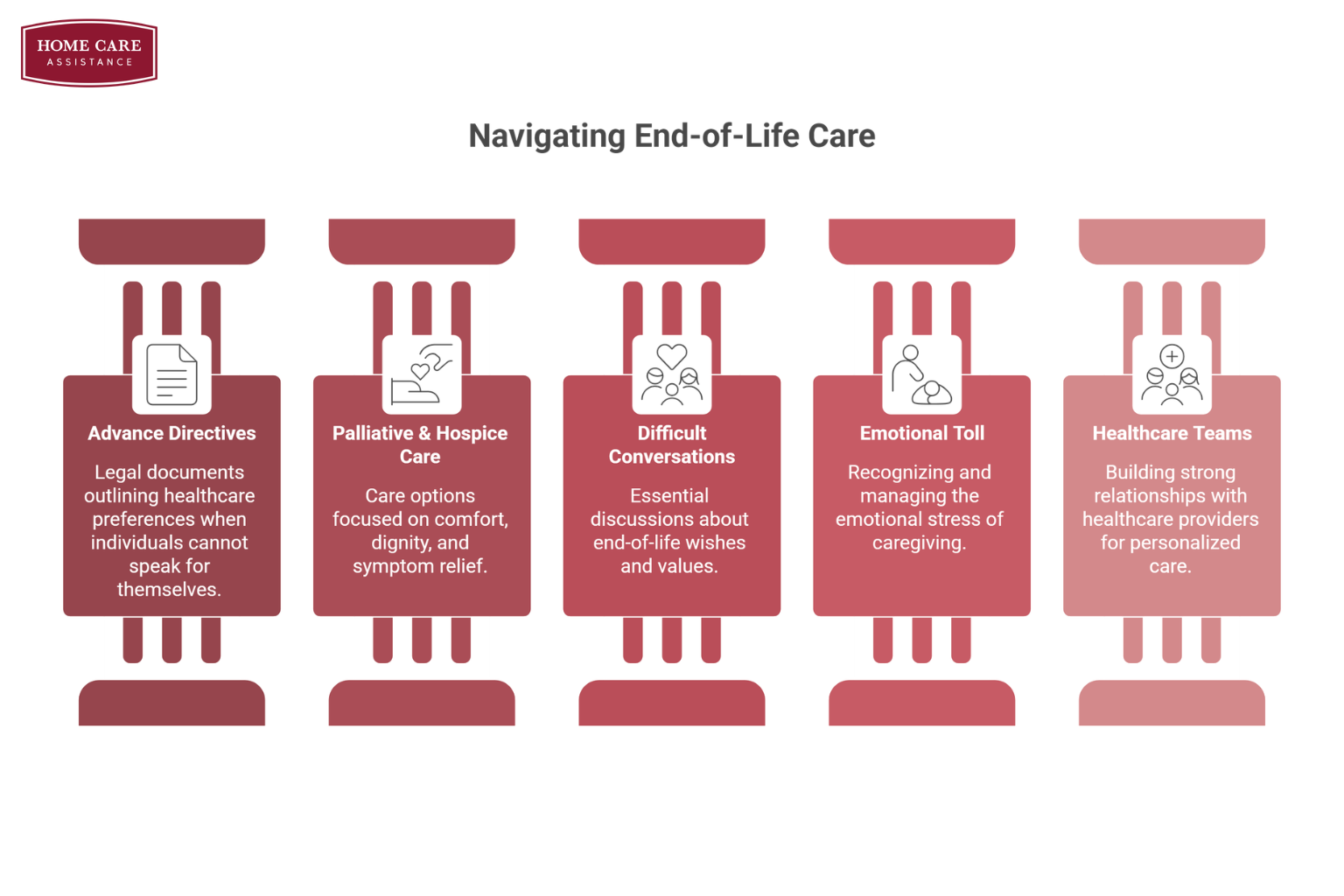
Advance directives are legal documents that communicate a person’s healthcare preferences when the individual can no longer speak for him or herself. These documents provide clarity for both families and medical professionals during critical moments.Key types of advance directives include:
- Living will – Outlines specific medical treatments a person wants or doesn’t want
- Healthcare power of attorney – Designates someone to make medical decisions on the individual’s behalf
- POLST (Physician Orders for Life-Sustaining Treatment) – Medical orders that travel with the person across different care settings
Many families have difficulty understanding the difference between palliative care and hospice care, yet both play crucial roles in end-of-life planning. Palliative care focuses on relieving symptoms and boosting quality of life for people with serious illnesses. It can be provided alongside curative treatments and isn’t limited to terminal diagnoses. This approach addresses pain management, emotional support, and coordination among different healthcare providers. Hospice care is specifically designed for people with life-limiting illnesses where curative treatment is no longer the goal. Services typically include:
- Pain and symptom management
- Emotional and spiritual support for seniors and families
- Medical equipment and medication reminders related to the terminal diagnosis
- Respite care for primary caregivers
Having Difficult Conversations about Preferences
Discussing end-of-life wishes feels overwhelming, but these conversations are essential for honoring your loved one’s values and reducing your own burden as a caregiver. Start by choosing a quiet, comfortable setting when your loved one is feeling his or her best. Ask open-ended questions about your loved one’s fears, hopes, and what matters most to him or her. Some helpful conversation starters include:- “What does a good day look like for you right now?”
- “Are there specific treatments you definitely want or want to avoid?”
- “Who would you want involved in making healthcare decisions if you can’t?”
Managing the Emotional Toll of Caregiving
Caregiving during end-of-life situations creates significant emotional and physical stress. Recognizing this impact and seeking support isn’t selfish—it’s necessary for providing the best care possible.Common emotional challenges include:
- Grief that begins before death occurs (anticipatory grief)
- Guilt about not doing enough or making the “right” decisions
- Anger at the situation or even at your loved one
- Exhaustion from the physical and emotional demands