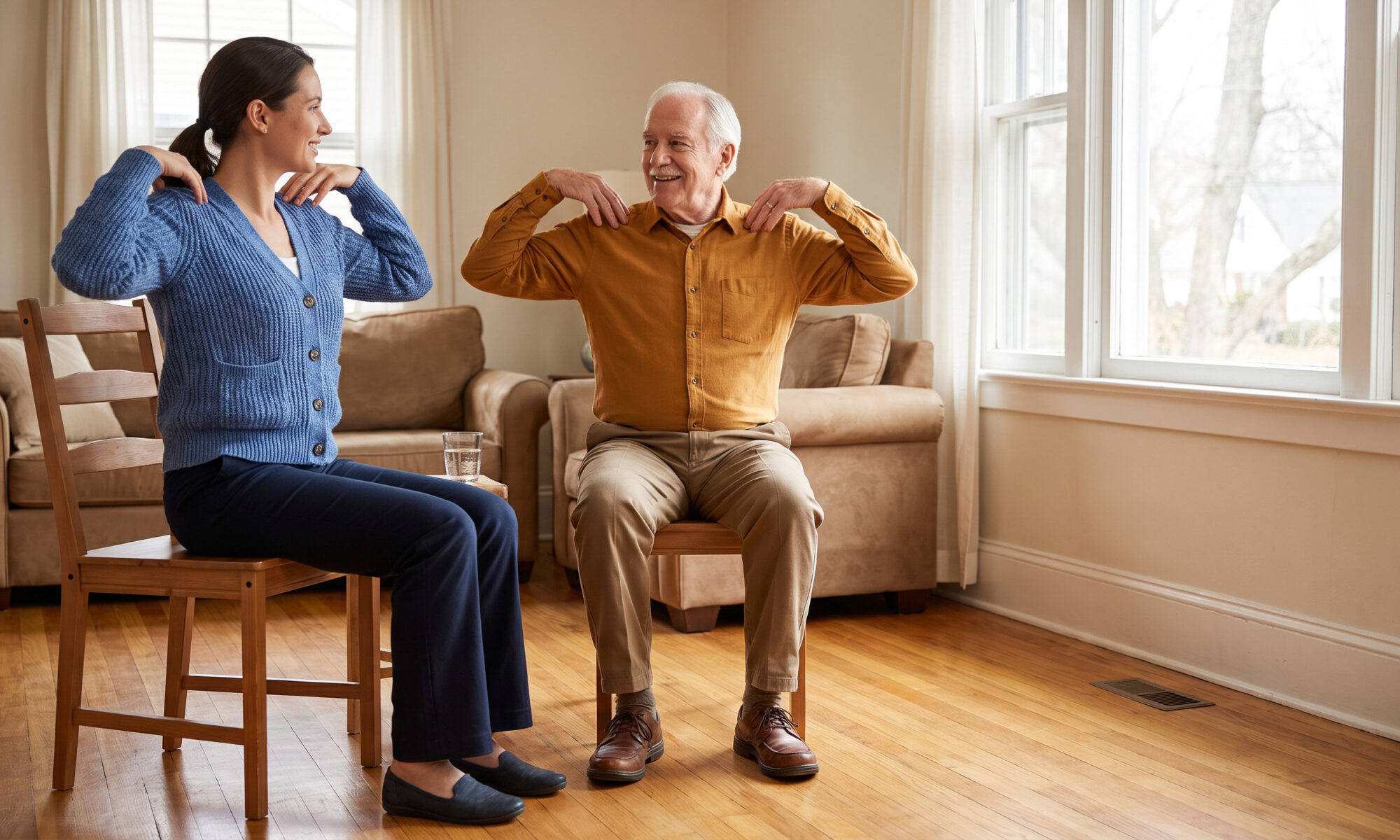
Why Is Daily Exercise Important for Seniors at Home?
Staying active supports physical and mental wellbeing in older adults in measurable ways:- Reduces the risk of falls by strengthening muscles and increasing balance
- Supports cardiovascular health and helps seniors manage chronic conditions like diabetes and arthritis
- Boosts mood and reduces feelings of isolation or depression
- Enhances sleep quality and daytime energy levels
What Types of Exercise Are Safe and Effective for Seniors?
Low-impact activities are generally well suited for older adults and easy to do at home:- Chair exercises – Seated leg lifts, arm circles, and ankle rolls build strength without strain.
- Walking – Even short indoor walks around the home provide meaningful cardiovascular benefits.
- Stretching – Gentle stretches increase flexibility and reduce stiffness.
- Balance exercises – Standing on one foot near a wall or counter can prevent falls.
- Light resistance training – Using resistance bands or small hand weights can maintain muscle mass.
How Can Caregivers Make Exercise a Daily Habit?
Consistency is key. Here are practical ways to make movement a natural part of the day:- Set a regular time – Tying exercise to an existing routine (like after breakfast) builds the habit.
- Keep it short – Even 10 to 15 minutes of activity delivers real benefits.
- Make it social – Exercising together or joining a virtual class adds motivation and connection.
- Celebrate progress – Acknowledging small wins encourages seniors to keep going.
- Use music – Playing familiar upbeat songs can make movement more enjoyable.
How Can You Keep Seniors Motivated to Exercise?
Motivation can fluctuate, especially on difficult days. These strategies can help:- Let your loved one choose activities he or she enjoys. Autonomy increases engagement.
- Set achievable goals, such as walking to the end of the hallway and back twice a day.
- Track progress visually with a simple calendar or chart.
- Remind your loved one of the benefits he or she has personally experienced, such as better sleep or less joint stiffness.
What Are the Best Ways to Adapt Exercise for Limited Mobility?
Not all seniors have the same physical capabilities, and that’s okay. Exercise can be adapted:- Seated or bed-based exercises work well for those with severe mobility limitations.
- Use supportive equipment like grab bars, stable chairs, or walkers during movement.
- Focus on range of motion rather than intensity for joint pain.
- Break activity into multiple short sessions throughout the day rather than one longer session.
Frequently Asked Questions
How much exercise should a senior get each day? +
Most health guidelines recommend at least 150 minutes of moderate activity per week for older adults, but even 10 to 15 minutes of daily movement provides meaningful health benefits.
What if my loved one refuses to exercise? +
Starting with very short low-effort activities and framing them as enjoyable rather than obligatory can help. Involving your loved one in choosing the activity may also increase willingness to participate.
Can exercise be done indoors without any equipment? +
Yes. Chair exercises, stretching, and walking around the home require no equipment and can be done entirely indoors.
How do I know if an exercise is too strenuous for my loved one? +
Watch for signs like shortness of breath, dizziness, or complaints of sharp pain. Activity should feel manageable. Mild fatigue is normal, but discomfort is a signal to stop and rest.
Are there online resources for senior exercise routines? +
Yes. Platforms like SilverSneakers and YouTube channels dedicated to senior fitness offer free guided exercise videos designed specifically for older adults.