
Table of Content
What Is a Memory Box?
A memory box is a container filled with personal items that hold special significance for an individual. Unlike regular storage boxes, memory boxes are specifically curated to trigger positive memories and emotional responses. These therapeutic tools typically include:- Photographs from important life events
- Personal artifacts like jewelry, tickets, or awards
- Sensory items such as fabric samples or small trinkets
- Letters or documents that tell a person’s story
- Small objects connected to hobbies or interests
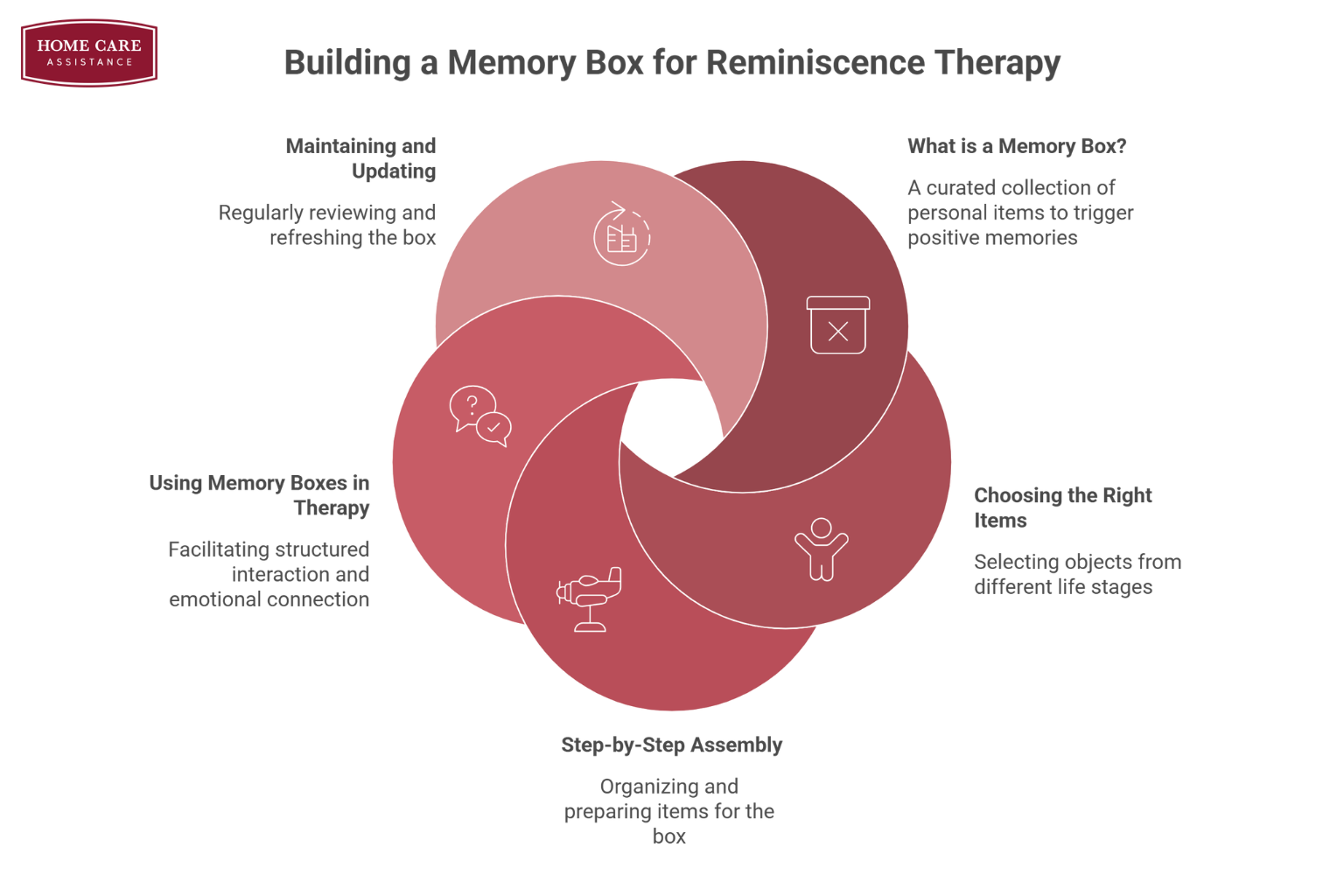
Choosing the Right Items for a Memory Box
Selecting meaningful objects requires thoughtful consideration of your loved one’s life history and current cognitive abilities. Start by gathering items from different life stages:Early life and childhood
- School photos or report cards
- Small toys or games your loved one enjoyed
- Items representing your loved one’s hometown or family traditions
Career and achievements
- Work-related memorabilia
- Awards or certificates
- Tools of your loved one’s trade (miniature versions work well)
Family and relationships
- Wedding photos or anniversary items
- Pictures of children and grandchildren
- Items that represent shared activities or vacations
Hobbies and interests
- Materials related to favorite pastimes
- Music-related items like small instruments or sheet music
- Sports memorabilia or craft supplies
Step-by-Step Assembly Process
Creating an effective memory box follows a systematic approach that ensures both safety and therapeutic value:- Select an appropriate container – Choose a sturdy box that’s easy to open and close. Shoeboxes, decorative storage containers, or specialized memory boxes work well.
- Organize items by category – Group similar items together before placing them in the box. This makes it easier to guide conversations during therapy sessions.
- Add protective materials – Use soft fabric, tissue paper, or bubble wrap to protect delicate items and create a pleasant tactile experience.
- Include written descriptions – Attach small labels or create a separate sheet explaining the significance of each item. This can help you facilitate meaningful discussions.
- Test accessibility – Ensure all items are easy to remove and handle safely, considering any physical limitations your loved one may have.
Using Memory Boxes in Therapy Sessions
The therapeutic value of memory boxes comes from structured interaction rather than passive viewing. Effective sessions typically follow these guidelines:- Create a comfortable environment by choosing a quiet space with good lighting and minimal distractions. Sit beside your loved one rather than across from him or her to create a collaborative atmosphere.
- Start with familiar items that are likely to trigger positive memories. Allow plenty of time for your loved one to examine each object and share whatever comes to mind.
- Ask open-ended questions like “Can you tell me about this photo?” or “What does this remind you of?” Avoid testing your loved one’s memory with specific questions about dates or names.
- Follow your loved one’s lead in conversations. If your loved one wants to spend more time with one particular item, encourage that exploration rather than rushing to show everything.
- Be patient with responses and remember the goal is engagement and emotional connection, not accurate recall of specific details.