Table of Content
There’s a Hidden Mental Health Crisis among Seniors
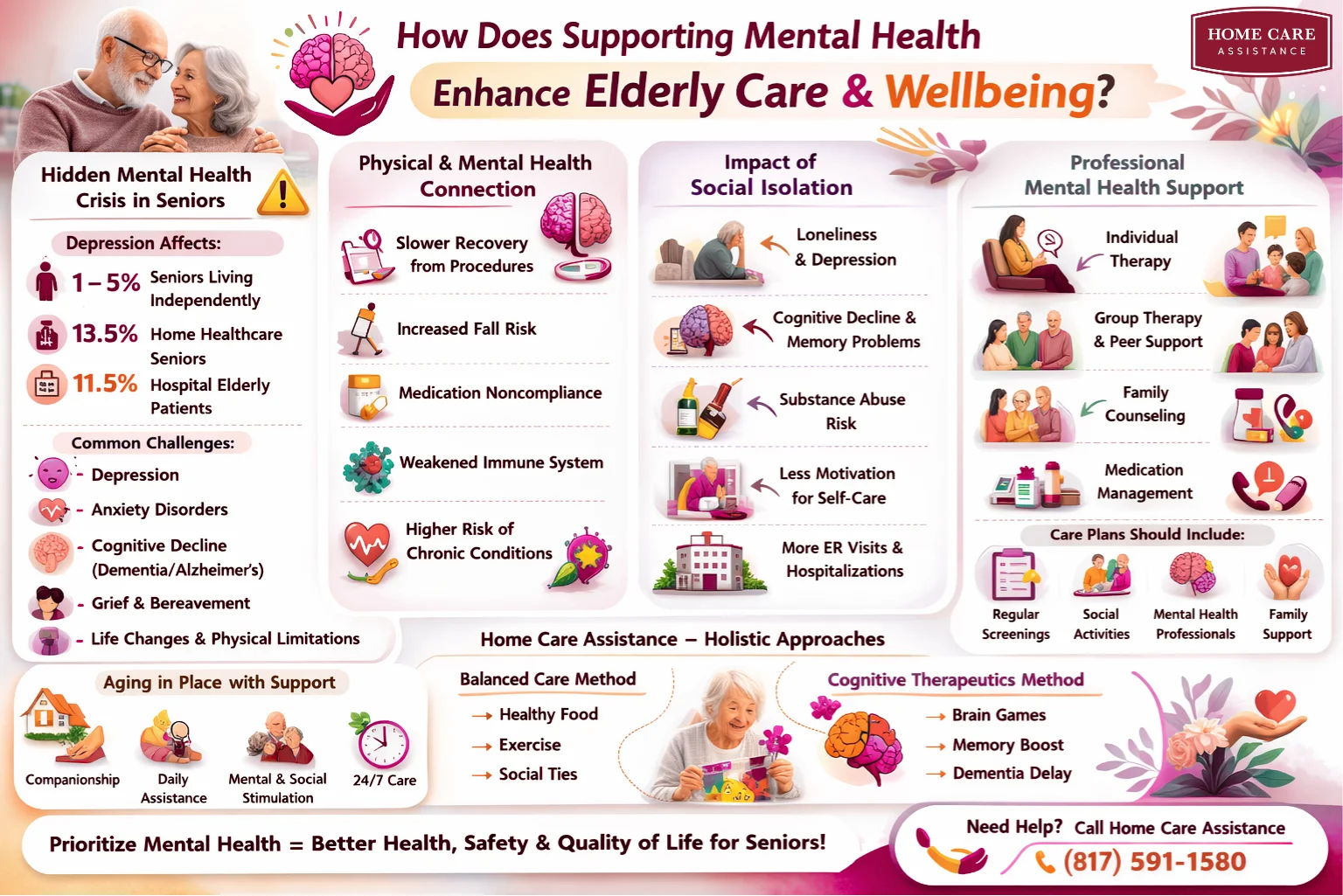
Many older adults experience mental health issues that often go unrecognized or untreated. Depression affects approximately 1 to 5 percent of seniors living independently, but this number jumps to 13.5 percent for those requiring home healthcare and up to 11.5 percent for elderly hospital patients. Common mental health challenges in seniors include:- Depression – Often triggered by loss of loved ones, health issues, or major life changes
- Anxiety disorders – Frequently related to health concerns, financial worries, or social isolation
- Cognitive decline – Including dementia and Alzheimer’s disease
- Grief and bereavement – Processing multiple losses of friends and family members
- Adjustment disorders – Difficulty adapting to retirement, relocation, or physical limitations
Physical Health and Mental Wellness Are Interconnected
The relationship between physical and mental health becomes increasingly important as people age. Mental health issues can worsen existing medical conditions, while chronic illnesses often contribute to depression and anxiety. Research shows seniors with untreated depression are more likely to experience:- Slower recovery from medical procedures
- Increased risk of falls and accidents
- Higher rates of medication noncompliance
- Weakened immune system function
- Greater likelihood of developing chronic conditions
Social Isolation Amplifies Mental Health Challenges
Loneliness and social isolation are major risk factors for mental health problems in seniors. Many older adults experience significant life transitions that can lead to decreased social connections, including retirement, loss of driving privileges, death of friends and family members, and physical limitations that restrict mobility. The impacts of social isolation include:- Increased rates of depression and anxiety
- Cognitive decline and memory problems
- Higher risk of substance abuse
- Decreased motivation for self-care
- Greater likelihood of emergency room visits and hospitalizations
Professional Mental Health Services Make a Difference
Access to qualified mental health professionals who understand the unique needs of older adults is essential for effective senior care. Specialized geriatric mental health services can provide targeted interventions that address age-related challenges. Key components of effective senior mental health support include:- Individual therapy – Tailored to address specific concerns like grief, life transitions, or chronic illness management
- Group therapy sessions – Providing peer support and reducing isolation
- Family counseling – Helping families navigate caregiving challenges and communication issues
- Medication organization – Ensuring psychiatric medications are appropriate for older adults and don’t interact with other prescriptions
- Crisis intervention – Immediate support during mental health emergencies
Creating Comprehensive Care Plans Is Essential
Effective senior care requires an integrated approach that addresses both physical and mental health needs. Care plans should include regular mental health screenings, access to counseling services, social activities, and family support resources. Healthcare providers, family members, and caregivers should work together to:- Monitor for signs of depression, anxiety, or cognitive changes
- Encourage participation in social activities and community programs
- Ensure access to mental health professionals when needed
- Create supportive environments that promote emotional wellbeing
- Educate families about mental health resources and warning signs