In Home Care in Irving, Texas
Home Care Assistance of Arlington, TX provides in home care for older adults throughout Irving, from the high rise corridors of Las Colinas and the neighborhoods of Valley Ranch to the older streets around the Heritage District and south Irving. Our caregivers assist with bathing, dressing, grooming, meal preparation, medication reminders, light housekeeping, transportation and companionship, on schedules that range from a few hours a week to around the clock support at home.
Irving families reach out to us for a reason that is specific to this city. Irving is one of the youngest large cities in North Texas, so an aging parent here is usually surrounded by working households rather than by peers. The informal support that carries older adults elsewhere, the neighbor who notices the newspaper piling up or the friend two streets over who drives to appointments, has to be built on purpose here. That is the work we do. Your family selects the caregiver who enters the home, a care manager is reachable 24 hours a day at (817) 591-1580, and every caregiver is trained in our Cognitive Therapeutics Method at no additional cost.


What does in home care in Irving, TX include?
In home care in Irving is non medical support delivered in a senior’s own home or apartment. A caregiver helps with personal care such as bathing, dressing, grooming and incontinence care, prepares meals, provides medication reminders, handles light housekeeping and laundry, drives to appointments and errands, and provides companionship and cognitive engagement. Care can be scheduled hourly, overnight, live in or 24 hours a day, and it can be provided in a private home, a condominium, an apartment or an assisted living community.
Every Home Care Assistance caregiver is trained in the Cognitive Therapeutics Method, a science based program of one to one activities that target attention, memory, language, visual spatial perception and executive functioning. It was designed for older adults with memory impairment, and it is included with care rather than billed as an extra service. For an Irving family weighing two agencies at similar rates, that is often the difference between a caregiver who watches television with a parent and a caregiver who works to keep that parent engaged.
Why does aging in Irving look different from the rest of the Metroplex?
Irving has roughly 257,000 residents and a median age near 33, which makes it one of the youngest cities of its size in Texas. Only about 22,000 residents are 65 or older. Compare that to a retirement heavy suburb where seniors are a visible bloc with a dense network of peers, clubs and neighbors on the same schedule. In Irving, an 80 year old is frequently the only older adult on the block, and the households on either side leave for work before eight and return after six.
The housing pattern compounds it. Fewer than four in ten Irving households own their home, which means a large share of older adults live in apartments, townhomes and condominiums rather than in a paid off house on a quiet cul de sac. Apartment living creates its own set of problems as mobility declines. Covered parking is a walk away, laundry may be down a corridor or a flight of stairs, elevators fail, and a leasing office has no obligation to notice that a resident has stopped picking up mail. Decline in an apartment is quiet, and it is often a phone call from three states away that finally catches it.
Irving is also one of the most internationally rooted cities in the country, with roughly a third of residents born outside the United States. Many older adults here did not spend forty years building a local life. They arrived later, sometimes to join adult children, and their community is their family rather than a neighborhood. When that family gets stretched, there is no second layer of support underneath.

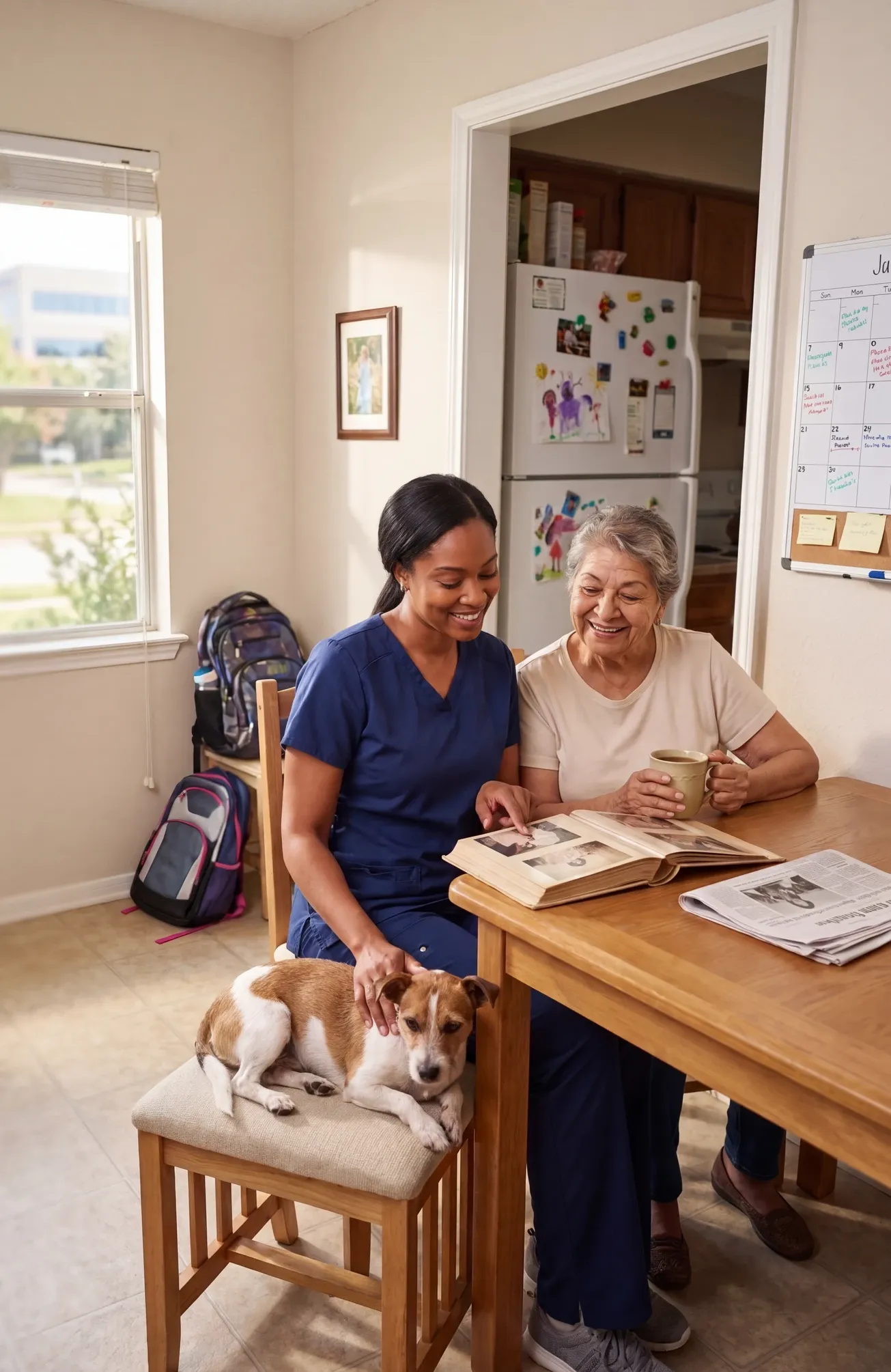
What does care look like when a parent lives with working adult children?
A large share of the Irving families we speak with are not looking to hand care over. The parent lives in the home, or in an apartment ten minutes away, and the family is already providing most of the day to day support. What they need is coverage for the hours nobody can cover, and relief before exhaustion turns into resentment or a health crisis of their own.
That usually looks like a caregiver present from mid morning until early evening, bridging the gap between the last person out the door and the first person home from a job in Las Colinas, Coppell or downtown Dallas. It can also look like a few weekend hours so an adult daughter can take her own children somewhere, or overnight coverage during a stretch when a parent is waking confused at two in the morning. Hourly and respite care exist for exactly this, and using it early is what keeps a family caregiver in the role for years instead of months.
Because the family stays central in this arrangement, the fit of the caregiver matters more than in almost any other setting. This person will be in a shared kitchen, around a family’s food, routines and language. We start by letting the family select the caregiver rather than assigning one, and we work to keep that caregiver consistent, because a rotating cast in a multigenerational household creates more work for the family than it removes.
Please extend my thanks to Susan and her dog. My mom was so relaxed and so happy with her day and it was clearly due to Susan.
Maureen D., client family
How does the Balanced Care Method help a parent stay at home longer?
The Balanced Care Method is our holistic, evidence informed approach to daily care. It is built around nutrition, physical activity, mental and social engagement, calm and a continued sense of purpose, and it turns a shift into something more deliberate than task completion. In practice it means a caregiver plans a real lunch rather than reheating whatever is nearby, works a short walk into the afternoon, keeps conversation and activity going, and protects the routines that give a day its shape.
Irving gives that approach somewhere to go. The city runs the Heritage Senior Center at 200 South Jefferson Street, a 40,000 square foot facility for residents 50 and older with fitness classes, aquatics, cards, crafts and organized trips. It is an excellent resource, and it is built for adults who can get themselves there and take part on their own. A caregiver can extend that window considerably by driving a parent over, walking in with them and staying nearby. When participation is no longer realistic, the structure and the social contact do not have to end. They move into the home.


What happens after a hospital stay at Baylor Scott and White in Irving?
Baylor Scott and White Medical Center in Irving sits at 1901 North MacArthur Boulevard along State Highway 183, with 293 beds and an 18 bed inpatient rehabilitation unit. Outpatient therapy for the area runs through Las Colinas locations on Kinwest Parkway and Las Colinas Ridge. For an Irving senior, that means a hospital stay usually ends in one of two ways, a short rehabilitation stay followed by discharge home, or a direct discharge home with a schedule of outpatient therapy appointments.
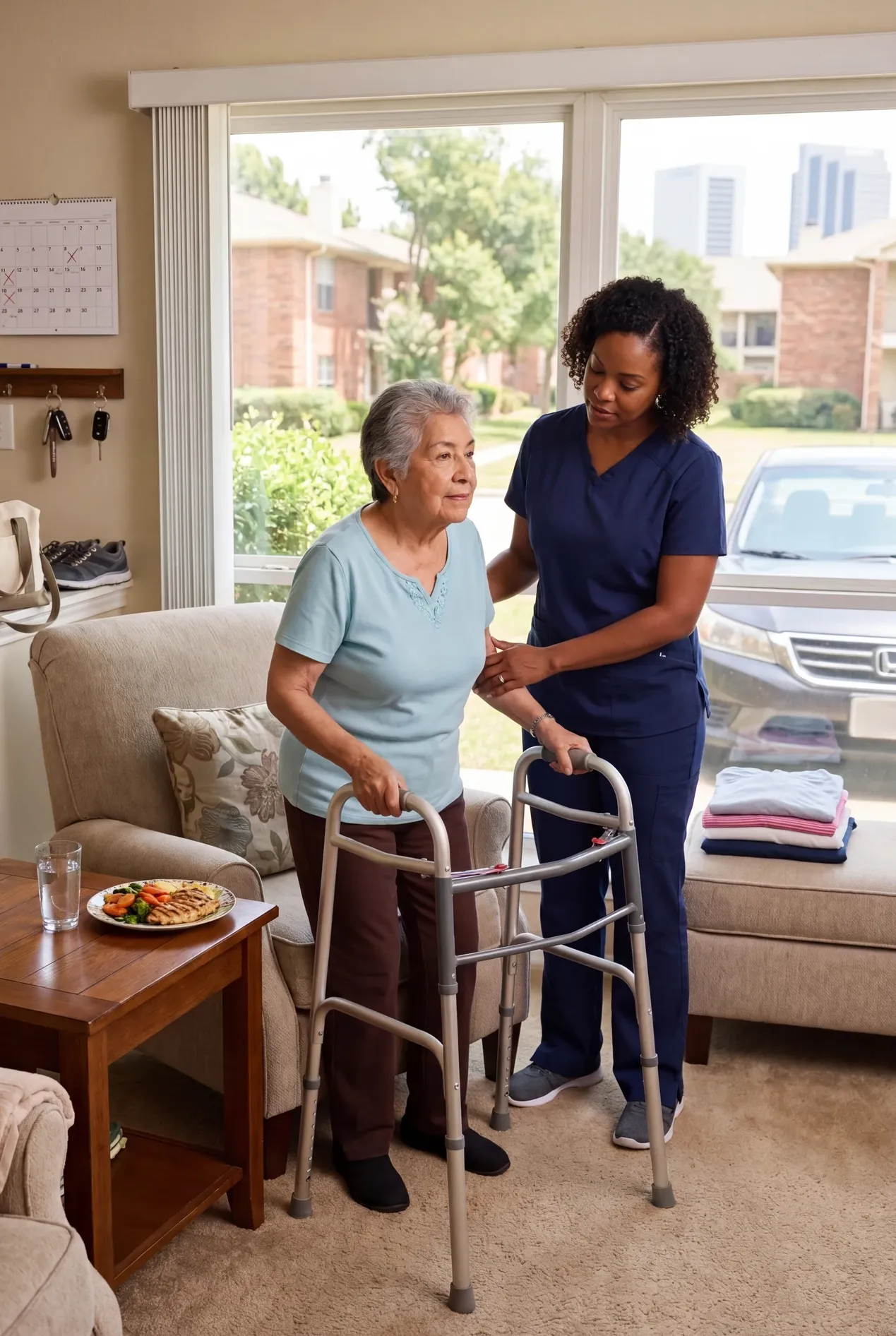
The first two weeks at home are where readmissions are made. A person comes back weaker than the family expected, on a changed medication list, with instructions given verbally at discharge to someone who was tired and frightened. Post hospital care covers that window. A caregiver is there for transfers and bathing when balance is worst, provides medication reminders on the new schedule, prepares meals that support recovery rather than whatever is in the freezer, watches for the signs that something is going wrong, and drives to every follow up and therapy appointment so that a missed ride does not become a missed recovery.
How do families manage care in Irving from out of state?
Dallas Fort Worth International Airport sits on Irving’s northwest edge, which means an out of state son or daughter can be at a parent’s door within half an hour of landing. It also means many Irving families have quietly built their care plan around visits. Someone flies in, spends four days fixing everything that has slipped, and flies home hoping it holds until the next trip.
It rarely does. What works better is a consistent caregiver in the home on a regular schedule and a care manager who is reachable at any hour, including from a different time zone. Our care managers are on call 24 hours a day, so a family member who wakes up at five in the morning worried about a phone call can talk to a person rather than leave a message. We also offer a free consultation by video as well as in the home, which lets a distant sibling take part in the assessment and the caregiver selection rather than hearing about it afterward.

Which parts of Irving do we serve?
We serve all of Irving, including Las Colinas, Valley Ranch, Hackberry Creek, Cottonwood Valley, Plymouth Park, University Hills, Irving Heights, the Heritage District and south Irving. Our office is at 6507 South Cooper Street, Suite 129 in Arlington, a straightforward run north on State Highway 360 to the 183 corridor, and we also serve neighboring Grand Prairie along with Mansfield, Cedar Hill, Duncanville, DeSoto, Midlothian, Burleson, Pantego and Dalworthington Gardens.
Irving spans two very different housing environments, and our care plans account for both. A live in caregiver in a Valley Ranch house has a spare bedroom and a driveway. A caregiver in a Las Colinas high rise deals with visitor parking, a fob, an elevator and a building that has its own rules about access. We work those details out before the first shift rather than during it.
What do families say about our caregivers?
Families judge a home care agency on two things, whether the caregiver shows up and whether the caregiver is any good. These are two of the notes we have received.
Carolina and her team really put the effort into finding the right match for the patient and their families. We have been fully supported by all members of the company.
Cathy S., client family
She was dependable, calm, caring and trustworthy, always on time, and I enjoyed her lovely sense of humor.
Patricia L. Waller, retired U.S. diplomat

How do you start home care in Irving?
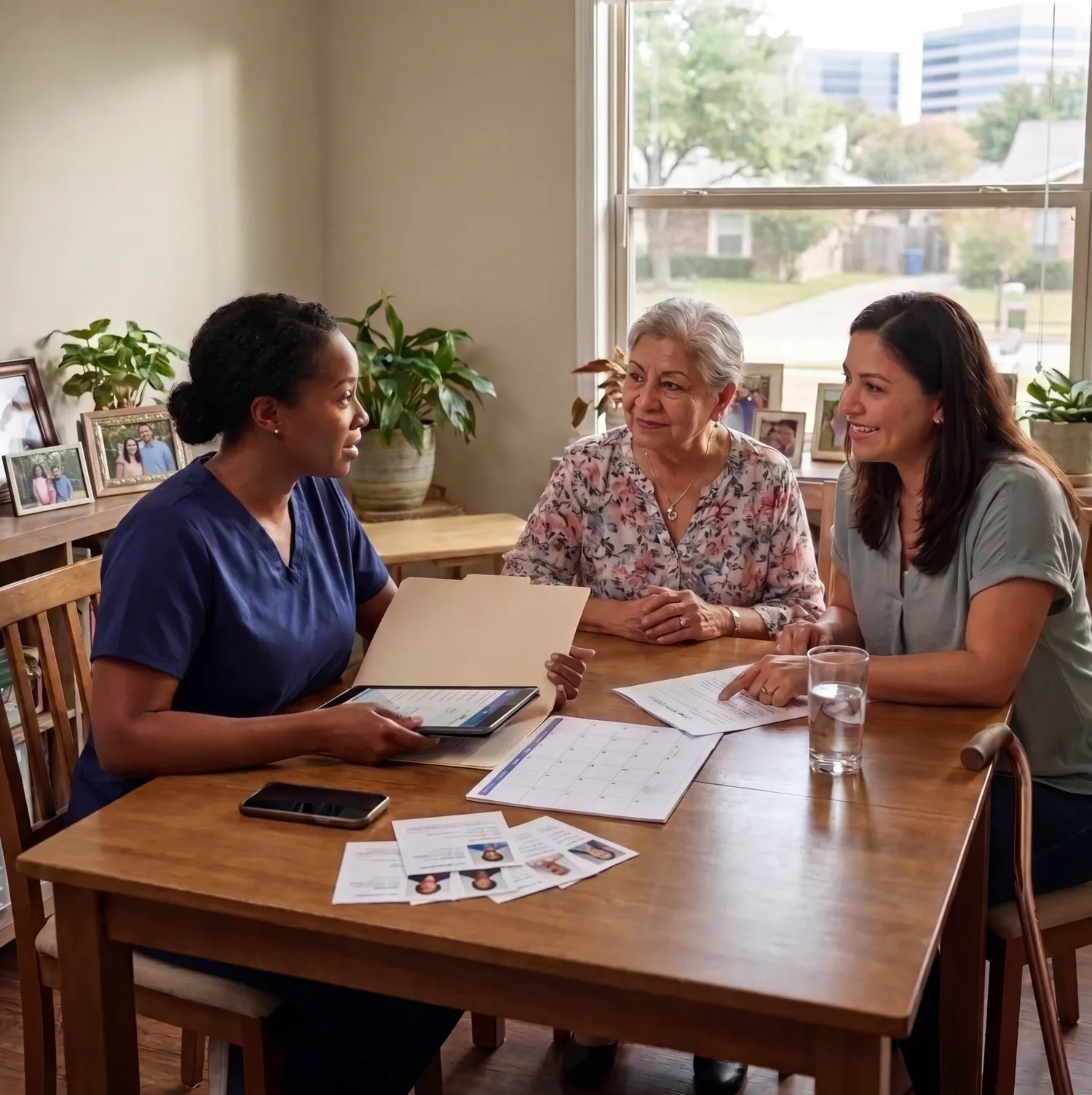
Start with a free consultation, in the home or by video. A care manager meets the family and the older adult, reviews health history, mobility, medications, safety concerns and daily routine, and builds a care plan around what is actually needed rather than around a package. From there the family reviews caregiver candidates and selects the person who fits, and care begins on the schedule the family sets. Plans are adjusted as needs change, which they always do.
To arrange a consultation for a parent in Irving, call (817) 591-1580. A care manager is available 24 hours a day, including weekends and holidays.
Frequently Asked Questions
-
How much does in home care cost in Irving, TX?
-
Cost depends on how many hours of care are scheduled each week and the level of assistance required. Hourly care, overnight care and live in care are priced differently, and a care plan built around three mornings a week costs far less than around the clock support. We provide a specific quote after a free in home or video consultation rather than a range that turns out not to apply.
-
Do you provide 24 hour home care in Irving apartments and high rises?
-
Yes. We provide hourly, overnight, live in and 24 hour care in houses, townhomes, condominiums and apartment buildings throughout Irving, including Las Colinas high rises. For buildings with controlled access, we arrange parking, entry and elevator access with the family and the management office before care begins.
-
Can our family choose the caregiver?
-
Yes. Family selection of the caregiver is standard with us rather than an exception. We match candidates to the care plan, the schedule and the household, and the family makes the final decision on who comes into the home.
-
Do you provide dementia and Alzheimer’s care in Irving?
-
Yes. Our caregivers are trained in the Cognitive Therapeutics Method, a program of one to one activities designed to support cognitive function in older adults with memory impairment, and it is included at no additional cost. Care for dementia and Alzheimer’s disease can be scheduled hourly, overnight or around the clock as supervision needs increase.
-
How quickly can care start in Irving?
-
Care can often begin within a few days of the consultation, and we work faster when a hospital discharge or a sudden change at home compresses the timeline. Call (817) 591-1580 and a care manager will tell you what is realistic for your schedule and location.
-
Can you provide care in an assisted living community in Irving?
-
Yes. Many families use a private caregiver alongside a community to add one to one attention, companionship and help during the hours when staff are stretched. We provide care in assisted living communities as well as in private residences.
-
Do you serve Las Colinas and Valley Ranch specifically?
-
Yes. Las Colinas and Valley Ranch are part of our Irving service area, along with Hackberry Creek, Cottonwood Valley, Plymouth Park, University Hills, Irving Heights and south Irving.