
What Are the Physical Risks of Prolonged Immobility?
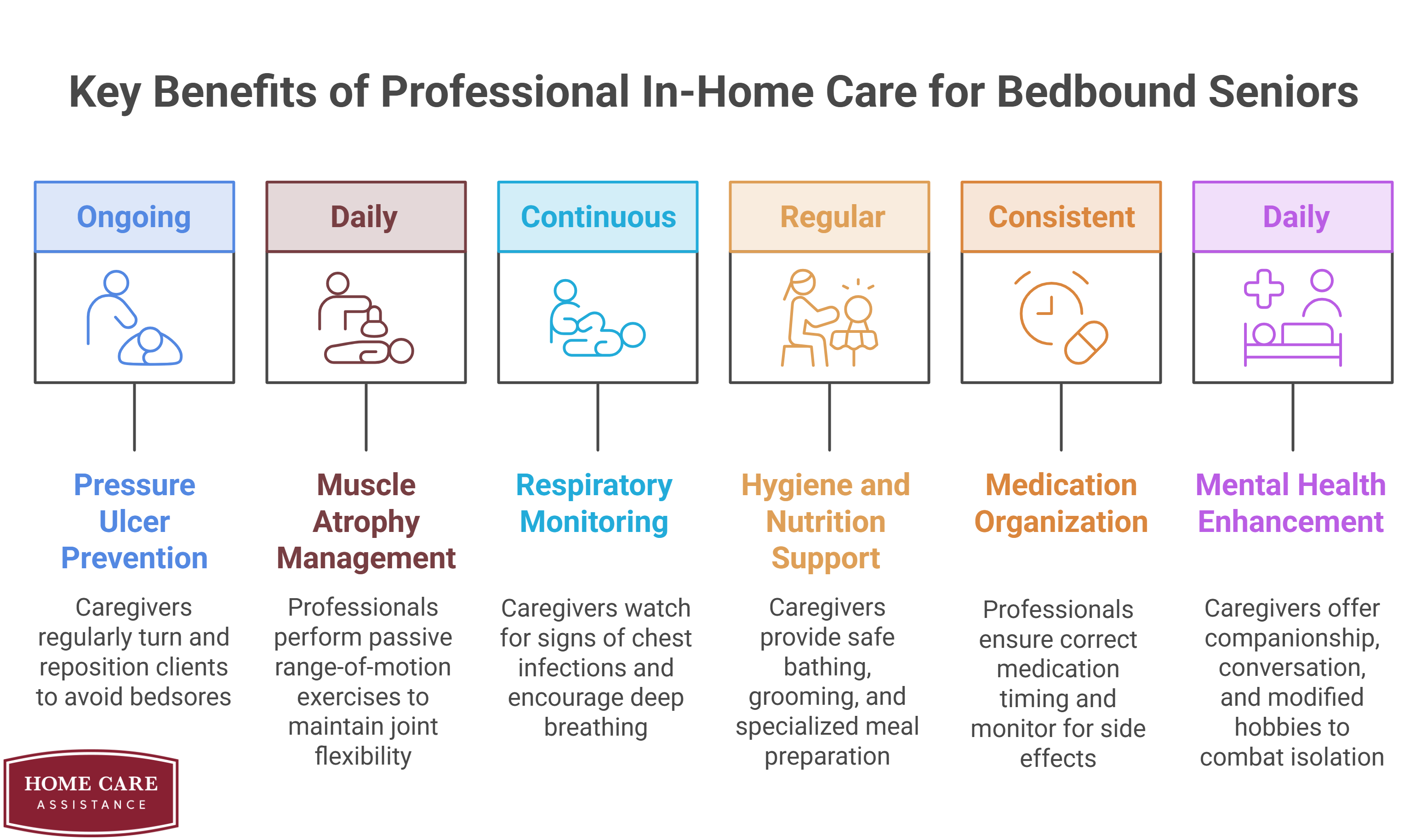
Prolonged immobility introduces severe physical health risks that require professional monitoring to prevent. Home care experts are trained to look for early warning signs of physical issues and take immediate preventative measures.- Pressure ulcers – Also known as bedsores, these develop from sustained friction and restricted blood flow. Caregivers know the exact techniques to safely turn and reposition bedbound clients.
- Muscle atrophy – Muscles weaken and joints stiffen rapidly without use. Professionals can perform passive range-of-motion exercises to keep joints flexible.
- Respiratory issues – Lying flat constantly increases vulnerability to chest infections like pneumonia.
How Do Professionals Manage Daily Hygiene and Nutrition?
Professional caregivers are specially trained to handle the complex hygiene and nutritional needs of bedbound clients safely. They know how to bathe, groom, and change seniors without causing skin tearing or joint pain. Furthermore, they can prepare specialized diets that account for swallowing difficulties and carefully track fluid intake to prevent dehydration. Many seniors prefer aging in place over moving to assisted living facilities. If your senior loved one needs assistance to remain safe and comfortable while living at home, reach out to Home Care Assistance, a leading provider of homecare services Irving seniors and families can rely on for compassionate, high-quality service. Our dedicated in- Burleson home care caregivers can assist with meal prep, bathing and grooming, exercise, medication reminders, and many other important tasks.Why Is Medication Organization Critical for Bedbound Seniors?
Strict medication organization is critical because bedridden seniors often live with multiple chronic conditions requiring complex dosing schedules. A simple medication mistake can cause severe health emergencies.- Caregivers offer reminders to ensure doses are taken at the correct times and in the proper amounts.
- Professionals constantly monitor for adverse drug interactions or negative side effects.
Can Professional Care Boost a Senior’s Mental Health?
Yes, professional care significantly enhances a senior’s mental health by providing consistent social interaction and dedicated emotional support. Being confined to a bed often leads to deep isolation, anxiety, and severe depression. Caregivers offer daily companionship, engage clients in stimulating conversations, and help them participate in modified hobbies to boost their overall mood. If you’re the primary family caregiver for a senior loved one, live-in and 24-hour care are available if your loved one’s health has become too difficult to manage without professional expertise. A variety of health-related situations can make it difficult for a senior to continue living at home without someone there to help. Irving 24-hour home care professionals are trained to help seniors who need around-the-clock assistance. With the help of a 24-hour caregiver, your elderly loved one can maintain a higher quality of life while aging in place. Trust your loved one’s care to the professionals at Home Care Assistance. To create a customized home care plan, call today.Frequently Asked Questions
How much does professional home care for bedbound seniors usually cost? +
The cost varies widely based on location and the level of care required. Families can expect an hourly rate or a flat daily fee, which may be partially covered by long-term care insurance.
What’s the difference between skilled nursing care and in-home care? +
Skilled nursing care provides specialized medical services like wound care and injections from licensed professionals. In-home care focuses on nonmedical assistance like bathing, feeding, and daily companionship.
How can family members help alongside professional caregivers? +
Families can offer vital emotional support, handle financial planning, and spend quality time with their loved ones. This allows professionals to focus entirely on the seniors’ care needs.
Will Medicare pay for professional home care services? +
Medicare typically covers short-term, medically necessary home health care prescribed by a doctor. It generally doesn’t cover long-term custodial care for routine daily living activities.