
Should You Correct Seniors with Dementia When They’re Confused?
No, correcting seniors with dementia when they’re confused often does more harm than good. When you point out that your loved one’s perception is wrong, it can lead to embarrassment, agitation, or withdrawal.What to avoid:
- Saying “No, that’s not right” or “Don’t you remember?”
- Insisting on factual accuracy when it causes distress
- Repeatedly reminding your loved one of losses or difficult truths
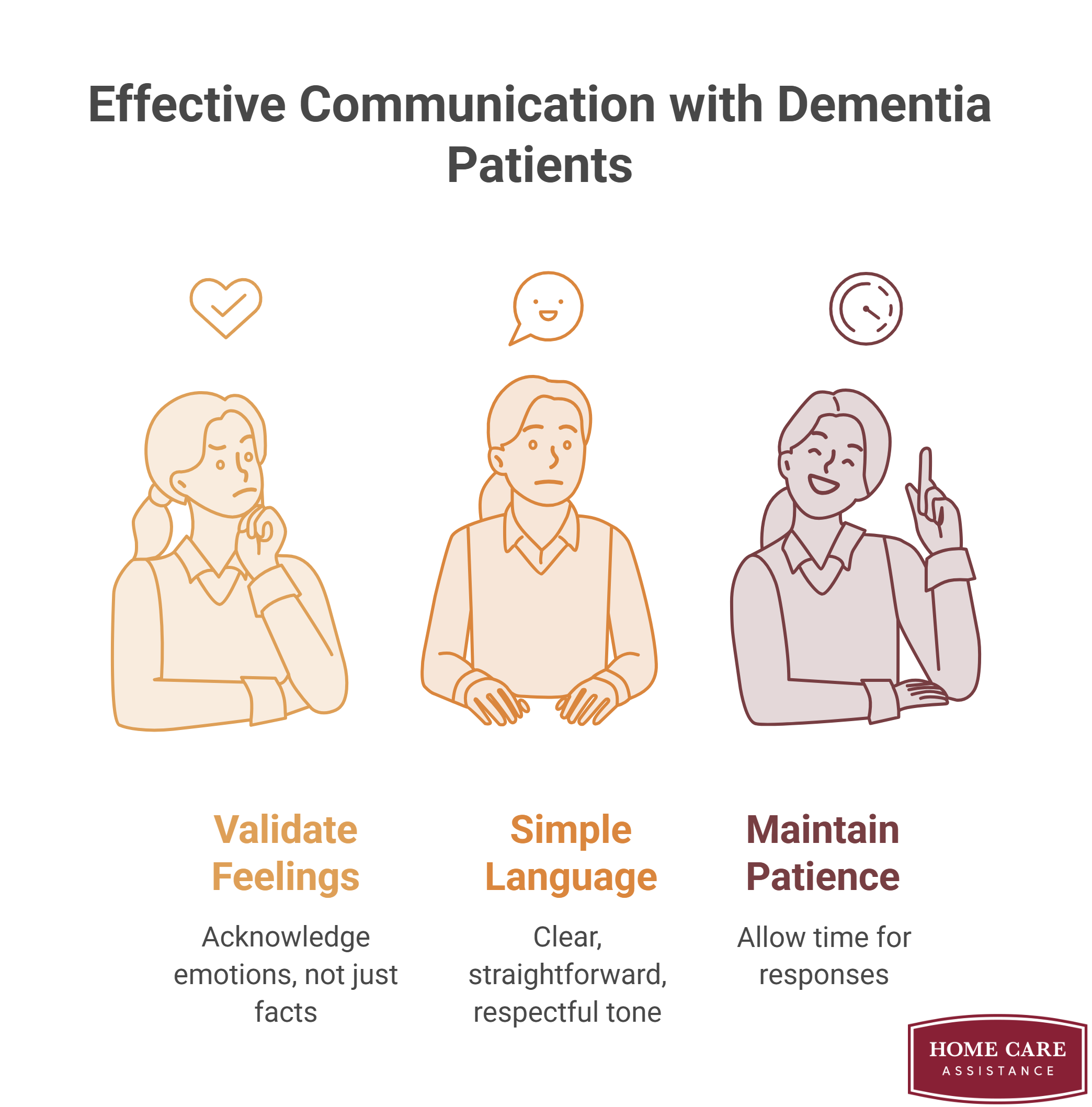
Is It Okay to Use Baby Talk or Childish Language?
Never use baby talk or speak to your loved one as if he or she were a child. This patronizing approach strips away dignity and can trigger feelings of anger, shame, or sadness.What to avoid:
- High-pitched, sing-song voices
- Terms like “sweetie,” “honey,” or “good girl/boy”
- Oversimplified explanations that feel condescending
Should You Rush through Conversations?
Rushing conversations with someone receiving dementia care creates unnecessary stress and confusion. Processing information takes longer when cognitive abilities are affected, and hurrying through interactions signals that your loved one is a burden.What to avoid:
- Finishing your loved one’s sentences or speaking for him or her
- Moving quickly from topic to topic
- Showing impatience through body language or tone
Is It Helpful to Argue or Use Logic to Convince Them?
Arguing or relying on logic rarely works when communicating with someone who has dementia. The disease affects memory and reasoning, making logical arguments frustrating and ineffective for both parties.What to avoid:
- Debating facts or trying to prove your point
- Asking “Why did you do that?” or “What were you thinking?”
- Using complex reasoning to change your loved one’s mind
Should You Show Frustration or Negative Emotions?
Displaying frustration, anger, or irritation when communicating with your loved one damages trust and increases anxiety. People with dementia often retain the ability to read emotions and tone even when they have difficulty with words.What to avoid:
- Sighing heavily or rolling your eyes
- Raising your voice or speaking sharply
- Making comments like “We’ve been through this already”
Frequently Asked Questions
What should I do if my loved one with dementia becomes upset during conversations? +
Stay calm, validate your loved one’s feelings, and gently redirect the conversation to a more comfortable topic. Sometimes simply offering reassurance or a comforting touch can help.
How can I tell if I’m communicating effectively? +
Watch for signs of relaxation, engagement, or positive responses. If your loved one seems confused, agitated, or withdrawn, adjust your approach by simplifying your language or slowing down.
Is it okay to use humor when speaking to someone with dementia? +
Yes, appropriate humor can be wonderful if your loved one responds positively. Avoid sarcasm or jokes at your loved one’s expense, and pay attention to whether he or she is enjoying the interaction.
Should I remind my loved one about upcoming appointments or changes? +
Provide reminders, but don’t expect your loved one to retain the information. Repeated gentle reminders closer to the event work better than expecting your loved one to remember from days before.
What if my loved one doesn’t recognize me anymore? +
Continue treating your loved one with warmth and respect even if he or she doesn’t remember your relationship. Focus on creating positive moments in the present rather than trying to make your loved one remember the past.