
Hiring in-home care for a senior loved one is a significant decision that involves more than just finding the right caregiver. It’s crucial to understand the legal and financial responsibilities that come with being an employer to avoid potential complications down the road.
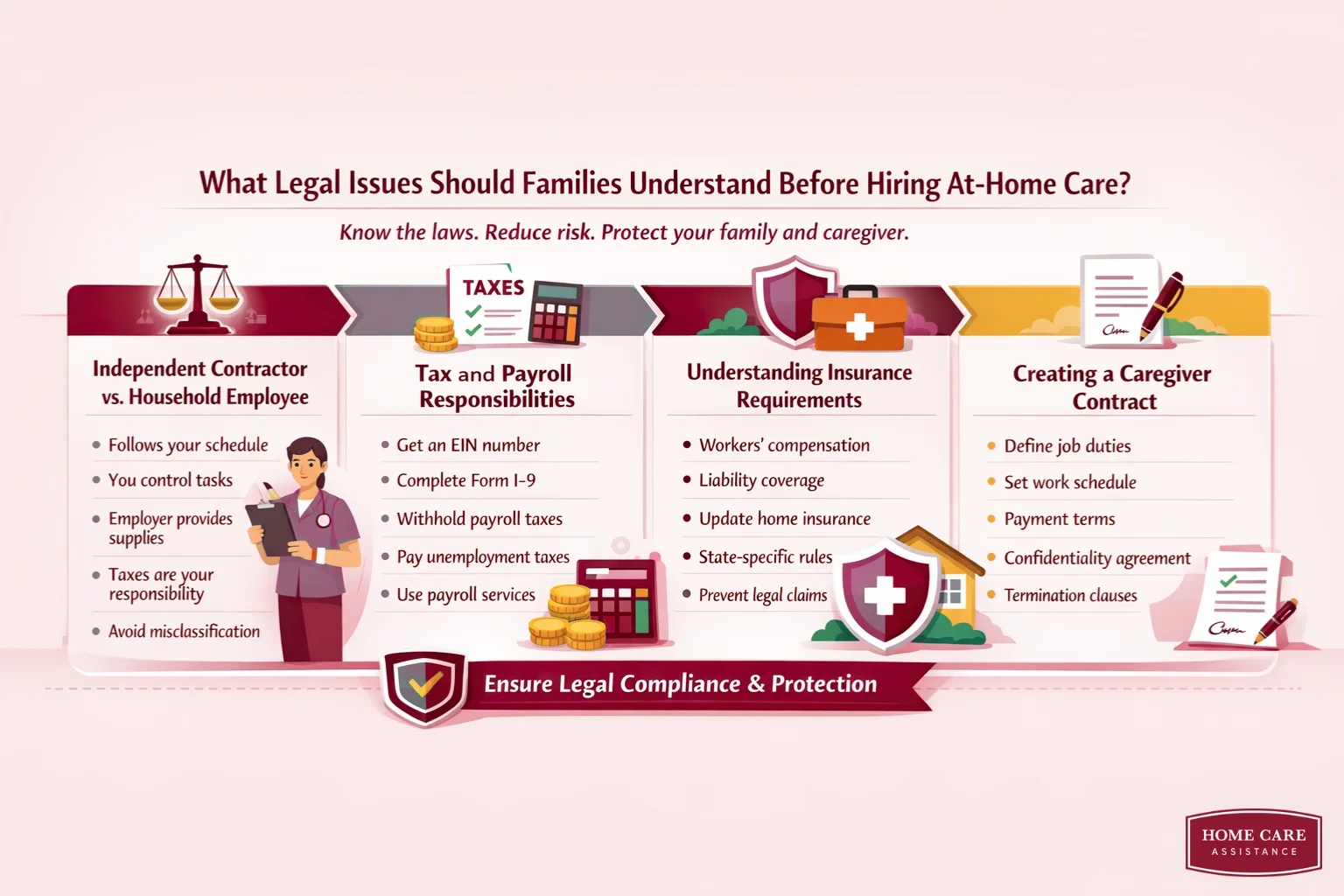
Independent Contractor vs. Household Employee
One of the first decisions you’ll face is whether to classify your caregiver as an independent contractor or a household employee. This distinction is critical because it determines your tax and legal obligations. According to the IRS, a caregiver is generally considered a household employee if you control not only the work the caregiver does but also how he or she does it.- Household employee – You dictate the caregiver’s schedule, provide instructions on care tasks, and supply necessary equipment. In this case, you’re the employer and are responsible for withholding and paying taxes.
- Independent contractor – The caregiver operates as a self-employed individual, controls his or her own schedule, and provides his or her own supplies. The caregiver is typically hired for a specific job and timeframe.
Tax and Payroll Responsibilities
Once you establish an employer-employee relationship, you must manage tax and payroll obligations. This can seem daunting, but breaking it down into steps makes it more manageable. Key responsibilities include:- Obtaining an employer identification number (EIN) – You’ll need an EIN from the IRS to report federal taxes.
- Verifying employment eligibility – You must confirm the caregiver is legally eligible to work in the United States by completing Form I-9.
- Withholding taxes – You’re responsible for withholding Social Security and Medicare taxes (FICA) from the employee’s pay if he or she meets the annual wage threshold set by the IRS. You also pay a matching employer portion of these taxes.
- Paying federal and state unemployment taxes – If you pay a household employee a certain amount in a calendar quarter, you’re likely required to pay federal (FUTA) and state unemployment taxes.
Understanding Insurance Requirements
Having the right insurance coverage is essential to protect yourself from liability. Depending on your state’s laws, you may be required to carry specific types of insurance.- Workers’ compensation – Many states mandate workers’ compensation insurance for household employees. This covers medical expenses and lost wages if your caregiver is injured on the job. Without it, you could be held personally liable for these costs.
- Liability insurance – A standard homeowners or renters insurance policy may not cover accidents involving a household employee. Check with your insurance provider to see if you need an additional liability rider or a separate policy to ensure you’re adequately protected.
Creating a Caregiver Contract
A formal employment agreement, or caregiver contract, is a vital document that clarifies expectations for both you and your employee. It prevents misunderstandings and provides a clear framework for the working relationship. Your contract should outline:- Job responsibilities – A detailed list of duties, such as personal care, meal preparation, medication reminders, and housekeeping
- Work schedule – The specific days and hours the caregiver is expected to work
- Compensation – The hourly pay rate, pay schedule (e.g., weekly, biweekly), and overtime pay details, compliant with federal and state labor laws
- Policies – Rules regarding confidentiality, communication, sick leave, vacation time, and grounds for termination